
Ever felt excluded, unwelcome, like an outsider? That ends with Jesus!

Study Guide: Acts 8:26-40

Imagine you are a "VIP" in your country. You handle the national treasury, you have the ear of the Queen, and you travel with a full security detail. You have everything money can buy, including a hand-copied religious scroll that cost as much as a luxury car. But there’s a catch: the religion you are most interested in considers you "broken."
You just traveled hundreds of miles to visit the great Temple in Jerusalem, but because of a physical condition you didn't choose, the religious leaders told you that you weren't allowed to fully enter. You are headed home, sitting in your chariot on a dusty road, reading about a "Suffering Servant" and wondering, "Is there ever going to be a place for someone like me?"
This is where we find the man in today’s study. It’s a story about how God will bypass the crowds and send a messenger miles into the desert just to tell one "outsider" that the door is finally open.
👇🏻 Want to see what a modern-day Christian community can look like? Watch This 👇🏻
Before you dig into the study guide, I would suggest reading or listening to the passage in two different bible translations from this list: NIV, NLT, NASB, ESV, NKJV

Learn more about our exciting out-of-the-box ministry here
Setting the Scene:

To understand why this encounter on a lonely road changed the world, we have to look at the "where" and the "who."
The Location: The Road to Gaza In Acts 8:26, an angel tells Philip to go south to the road that runs from Jerusalem to Gaza. Luke adds a specific note: "This is a desert road." There were two ways to get to Gaza; one was a busy, paved route, and the other was a rough, lonely path through the wilderness. Philip is sent to the quiet one.
The History of the Road This area was the old heartland of the Philistines—the ancient enemies of Israel. It was the land of Samson and Goliath. For a Jewish man like Philip to travel here was a reminder of old wars. But Philip isn't going as a soldier; he is going as a "Mobile Temple." He had to walk about 40 to 50 miles from Samaria to reach this spot. That’s a multi-day hike in the heat, all for an appointment he didn't even know he had yet.
The Traveler: The Ethiopian Official In the chariot sits a man from Ethiopia (which, in the ancient world, referred to the Kingdom of Aksum or Meroë, in modern-day Sudan).
His Power: He was the Treasurer for the Kandake (the title for the Queen). He was incredibly wealthy and educated.
His Status: He was a eunuch. In royal courts, men were often castrated to ensure their total loyalty to the throne since they could have no families of their own.
The Conflict: This physical condition made him a permanent "outsider" in Jerusalem. Deuteronomy 23:1 strictly forbade anyone "damaged" in this way from entering the assembly of the Lord. He was a man who loved the God of Israel but was told by the religious "Gatekeepers" that he would never truly belong.
Question from Tammy Fager: "Wait... how did Philip know this man was a eunuch? "
This is a great question because it gets into the practical "detective work" of the Bible. How do you identify someone’s specific physical or social status just by seeing them on a road?
There are three main ways—historical, cultural, and literary—that explain how Philip (and later Luke, the author) would have known this man was a eunuch.
1. Visual Markers: The "Royal Uniform"
In the ancient world, you didn't just wear whatever you wanted; your clothes and your "ride" told everyone exactly who you were.
The Chariot: This wasn't a standard travel wagon. As the Treasurer for a Queen, he would have been traveling in a state-of-the-art royal chariot, likely decorated with symbols of the Ethiopian court.
The Attendants: A man of his status wouldn't be driving himself. He would have had a retinue of servants and guards.
Physical Appearance: Historically, eunuchs often had distinct physical characteristics due to the hormonal changes of castration (such as a lack of facial hair, a specific high-pitched voice, or a different skin texture).
The Look: In many ancient Near Eastern and African cultures, eunuchs wore specific types of clothing or headwear that signaled their role as "Palace Officials." Philip likely knew his status before he even reached the chariot just by looking at the "branding" of the caravan.
2. Cultural Context: The "Kandake" Connection
The mention of the Kandake (the Queen of the Ethiopians) is a huge clue.
The Custom: In the Kingdom of Meroë (ancient Ethiopia/Sudan), it was common practice for the Queen’s high-ranking male officials—especially those managing her personal treasury or household—to be eunuchs.
The Reputation: To a first-century person, hearing "Official of the Kandake" was almost synonymous with "Eunuch." It was the standard "human resources" policy of that specific royal court. Philip would have understood this immediately upon hearing the man's title.
3. Literary Evidence: Luke’s Investigation
We have to remember how Luke wrote the book of Acts. In his Gospel (Luke 1:1–4), he tells us he interviewed eyewitnesses and "carefully investigated everything from the beginning."
The Source: Luke likely got this story directly from Philip. Later in Acts 21:8, we see Luke and Paul actually staying at Philip’s house in Caesarea for several days.
The Conversation: It’s almost certain that during those dinners, Philip retold the story of his "desert appointment." Philip would have recounted the man’s title, his physical appearance, and his conversion.
The Bible Logic: Luke includes this detail because it is vital to the theme of the "Mobile Temple." He wanted to show that the Gospel was reaching the very people who were physically barred from the old Temple system.
Why "Eunuch" and "Official" are linked in the text
In the Greek language, the word Luke uses is eunouchos. Interestingly, in ancient times, this word could mean two things:
A literal physical eunuch (someone castrated).
A title for a high government official (because so many officials were eunuchs).
However, in this context, most scholars (including those like Craig Keener) agree it refers to both. The man was a high-ranking official and a literal eunuch. This is why his question about baptism—"What prevents me?"—is so powerful. He knew that under the old law, his physical body was the "prevention."
Sum It Up
Philip knew because of the man’s royal "branding" and the common knowledge of the Ethiopian court. Luke knew because he sat down and interviewed Philip years later. Both included the detail to prove that Jesus' rescue mission has no "physical requirements" for entry.
👇🏻 Now back to unpacking the rest of the passage... 👇🏻
In-Depth Summary of the Journey
In this section, we break down the conversation that changed the "Map of the Rescue" forever. Philip doesn't just give a speech; he helps a man connect the dots of a 700-year-old mystery.
1. The Divine Interception (Acts 8:27–29)
Philip sees the chariot and the Spirit tells him, "Go over and walk along beside the carriage." Philip doesn't just walk; he runs. He finds the official reading aloud—which was the standard way to read in the ancient world.
2. The Treasure in the Chariot (Acts 8:30-32)
The official was reading from the prophet Isaiah.
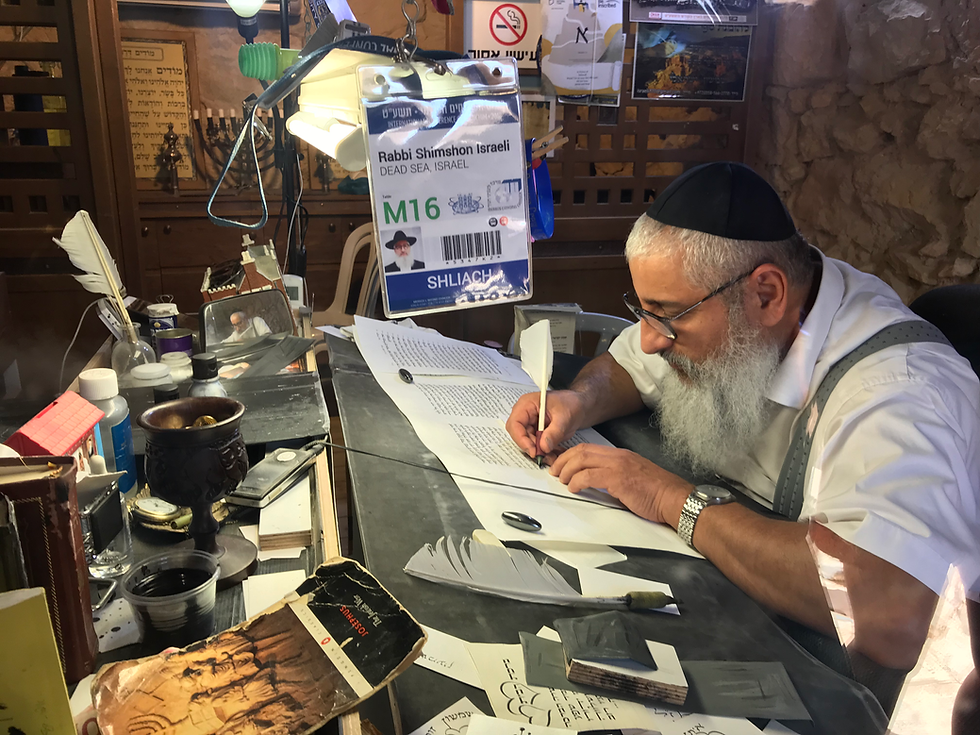
The Value of the Scroll: This wasn't a book. It was a 24-foot-long scroll made of hand-stitched animal skins. Because every letter had to be hand-inked by a professional scribe with 100% accuracy, a scroll of Isaiah was a massive investment. Most Jews never owned one; they only heard it read in the Synagogue, where it was kept in a locked chest. This man was so hungry for truth that he bought his own "library" to take back to Africa.
The Appeal of God: Why this God? Most ancient gods were seen as moody, selfish, or cruel. The God of the Jews was the Creator—He was holy, just, and had a moral law that actually made sense to a thinking person.
3. The Narrative of the Lamb (Acts 8:32–35)
The man was reading Isaiah 53:7–8, which describes a man led like a lamb to the slaughter, humiliated and denied justice.
The Question: The official asks, "Was the prophet talking about himself or someone else?"
The Explanation: As NT Wright points out, the Jews saw their scriptures as one long narrative (a story), not just random verses. Philip "starts at that very passage" and tells him the story of Jesus. He shows him that Jesus was the ultimate "Suffering Servant" who was also "cut off" and denied a family so that all who feel "cut off" could be brought into God's family.
4. Water in the Wasteland (Acts 8:36–39)
As they talk, they come upon some water. The official asks the million-dollar question: "What is to prevent me from being baptized?"
The Gatekeeper Problem: For his whole life, the answer had been "Everything." His race, his physical condition, and the old laws prevented him. Philip’s answer is a silent, powerful "Nothing."
The Archaeology of the Road: Many think a "desert road" means no water, but this route had several natural springs and seasonal streams (wadis). Archaeologists point to places like Ein el-Haniyeh, a spring along the road to Gaza that has been a watering hole for thousands of years.
Cool Blog about hiking in this area and swimming in this spring!
The First Non-Jew: This is a massive historical moment. This man is the first person in Acts with zero Jewish blood or legal status to be baptized. The "Mobile Temple" has officially reached Africa.
Why We Look at "Wrong" and "Right" Applications

This story is often treated as a simple "Sunday School" tale about a man in a chariot. But if we don't look closer, we miss the radical shift in how God deals with people. We look at the right and wrong ways to apply this so we don't miss the heart of the "Rescue Map."
🛑 Applying it Wrong: The Common Pitfalls
The "Checklist" Approach: Some people use this to argue about the "order" of salvation (you must read, then understand, then baptize). They turn a relationship into a legal checklist.
The "Philip was a Superhero" Idea: People often focus on the "miraculous" parts (like Philip being snatched away at the end) and forget the obedience part. Philip had to walk 40 miles in the heat. It wasn't "magic"; it was work.
The "Institutional Gatekeeper" View: Some denominational views suggest you need a "High Priest" or a special building to make baptism "count." Philip shows that all you need is a believer, a seeker, and some water.
✅ Applying it the Right Way:
To get the most out of this study, approach it with these three things in mind:
Historical Consistency: Recognize that God is fulfilling a promise. In Isaiah 56:3–5, God promised that one day eunuchs would be given a "name better than sons and daughters." Philip was simply delivering on God’s old promise.
Geographic Intent: Notice that God sent Philip away from a "successful" city revival to talk to one person. This shows that God’s priority is people, not just "numbers" or "crowds."
Cultural Humility: Philip, a Jew, had to be willing to sit in a chariot with a man his culture considered "unclean" and "different." The right application is to ask: "Who am I excluding that God is inviting?"
Questions to Chew on and Discuss:
These questions are designed to help you personally dig deeper into the passage.
The Guide: The official was a powerful, wealthy man, but he was humble enough to say, "How can I understand unless someone guides me?" Are you in a place where you are willing to let someone else—maybe someone "lower" in status than you—guide you into God's Word?
The "Nothing Prevents Me": If you were standing by that water today, what "excuse" would you give for why you aren't fully following Jesus? How does Philip’s "Nothing" answer challenge that excuse?
Journey Group Discussion Starter:
Whether you're helping facilitate a small group, talking about this passage one-on-one with a friend, or even just need a topic to guide the conversation at the dinner table, these ideas can help start a good group conversation before you dive into the passage and questions in this study guide.
The Great Banquet Connection: In Luke 14:15–24, Jesus told a story about a King who sent his servants into the "back alleys and country roads" to find the people no one else wanted. How is Philip’s trip to the Gaza road a real-life version of that story? Who are the people in our "back alleys" today that we might be overlooking?
Sum it Up

God doesn't see "outsiders." He sent Philip on a 50-mile hike into a hot desert just to reach one man who had been told he didn't belong. This story proves that the Bible is one big story pointing to Jesus, and that Jesus is the "open door" for everyone—regardless of their past, their physical condition, or their race. In the Kingdom of God, the "No-Go" zones are gone, and the invitation to the King's table is open to anyone who will repent of their sins, put their trust in Jesus, and celebrate their seat at the table through baptism.
Experience the God of the Wilderness

Throughout the Bible, the desert isn't just a place of heat and sand; it is God’s favorite classroom. It’s where He took Moses to see the burning bush, where He shaped the Israelites into a nation, and where Jesus was prepared for His ministry.
There is something about stepping away from the "safe structures" of the city and into the stillness of the high desert that clears the noise and lets you hear God's voice.
Are you willing to come to the wilderness for a time of preparation and growth? If you feel God moving you out of your comfort zone and into a deeper dependence on Him, we invite you to join us on our off-grid property in Northwest Arizona.
Arizona Bible Experience Retreat 📅 Dates: April 18-24, 2026 📍 Location: Meadview, AZ
Arizona Bible Experience Retreat 📅 Dates: May 16-22, 2026 📍 Location: Meadview, AZ
Incredible scenery, excellent teaching, and friendships forged from slot canyons to campfires. We have limited spots available to keep the experience intimate and impactful.
Several lodging options. Daily excursions. Shared meals, campfires, and more! Includes a day at the West Rim of the Grand Canyon and so much more.
BE SURE TO WATCH THE VIDEO PODCAST THAT GOES WITH THIS STUDY GUIDE
See viewer comments and questions on screen at the end of the podcast.
HAVE YOU WATCHED THIS VIDEO YET?
MORE RESOURCES TO HELP YOU GROW AS A CHRISTIAN
Read Our Full Statement of Faith: CLICK HERE
Your Jesus Journey is an independent, non-denominational Christian ministry. We're fueled by God's grace and the generosity of our supporters. Our team—led by Pastor Thad and his wife Kaila—is made up of dedicated disciples from all over the United States. Together, we work to help people understand the Bible, find Christian friends, and grow as disciple-makers.

Be sure to grab our free E-Book, "Stop Reading the Bible Wrong: 7 Strategic Shifts that Change Everything." Just click the Free Gift button at the top of our website, and we'll send it to you today!
Go to https://www.yourjesusjourney.com/journeygroups to learn more about Journey Groups, get connected in one, or even learn how to start your own. It's like a spiritual potluck, but instead of questionable casseroles, we share insights and grow closer to God. See you there!
You can also get our FREE in-Depth Bible-Study Guides delivered to your inbox: https://forms.wix.com/r/7330608166566101604.
To learn more about YJJ, Thad and Kaila, and Your Jesus Journey, check out our ABOUT US section: https://www.yourjesusjourney.com/learn-about-thad-and-kaila-and-the-journey-church-online.
There's lots more to see and learn on our website, from our "what we believe" page to hundreds of blogs. We encourage you to swing on by and take a look around at www.YourJesusJourney.com!


Comments