
What If Everything You Know About "Starting Over" Is Wrong? Welcome to the wisdom of Ezra


When life falls apart—whether it's a job loss, a broken relationship, or a health crisis—our natural instinct is to start rebuilding immediately. We grab a self-help book, sign up for a leadership class, or dive into a new workout routine, believing that the key to restoration is taking direct action. But what if the best first move in every one of those situations is the same, and it's probably not what you'd expect? What if a surprising and timeless blueprint for a fresh start exists in a book you might not have ever considered looking at for such a practical lesson?
You're about to learn a new way to rebuild, a way that starts with something other than your own effort.
That’s exactly what the ancient Israelites discovered. After 70 years of exile and a long journey home to a city in ruins, they were faced with the monumental task of rebuilding their lives and their nation. But instead of picking up a hammer, they picked up an offering. Let's dig into Ezra chapter 3, verses 1 through 6, and see how their counterintuitive first step can be your guide to a new beginning.
Before you dig into the story, I would encourage you to read through the passage in two different bible translations from this list: NIV, NLT, NASB, ESV, NKJV

Learn more about our exciting out-of-the-box ministry here
Setting the Scene IN EZRA 3: From Ruins to Revival

Imagine a homecoming after 70 years of exile. That's the scene in Ezra chapter 3. The Israelites, led by Zerubbabel and Jeshua, have returned to Jerusalem, but the city they once knew is gone. The temple, once the magnificent centerpiece of their faith and nation, is in ruins. The surrounding land is now inhabited by a mix of people—foreigners and those who were left behind—who have their own claims and customs.
The people who returned weren't just a random group; they were remnants of the exiled southern kingdom of Judah. They were descendants of the very people who were led away to Babylon. Knowing who they were—a remnant of the original people of God—teaches us that God is faithful to his promises. He preserved a people to bring them back to the land and fulfill his redemptive plan.
The first thing the returnees did was rebuild the altar for burnt offerings. This was a profoundly significant act. The altar was the central place of worship and atonement, where people brought sacrifices as a way to commune with God and be made right with him. By rebuilding it first, they were declaring that their relationship with God was the priority, before any political, economic, or physical rebuilding could take place.
This symbolic act was made even more powerful by its timing. They performed this act on the first day of the seventh month, which coincided with the start of the Feast of Tabernacles (Sukkot). This festival was instituted in Leviticus chapter 23 to commemorate Israel’s 40 years of wandering in the wilderness, where God provided for them and dwelt among them in a temporary shelter, or tabernacle. For a people who had just been delivered from their own captivity, celebrating this festival was an act of both historical memory and present trust. It was a new exodus, a new wilderness journey, and a public declaration that they were once again wholly dependent on God for their provision and protection.

This act was also incredibly risky. Ezra chapter 3, verse 3 states they were "in fear of the peoples of the lands." The locals were a diverse group and they were not happy about the returnees. They saw the Jews as an unwelcome disruption to their way of life and a threat to their political power.
The public worship of Israel's God was a direct challenge to the pagan practices of the surrounding peoples. This wasn't just a private religious ceremony; it was a loud and clear statement of identity and purpose that could have easily led to violence.
The Element of Fear and Modern-Day "Locals"
The Israelites were "in fear of the peoples of the land" (Ezra 3:3) for a very good reason. The locals—who were a mix of other ethnic groups and those who had remained in the land—were not pleased about the Jews returning.
Why they were afraid: The returning exiles were a direct threat to the power and land claims of these local groups. Rebuilding the altar and resuming worship according to Mosaic Law was a public declaration of a distinct religious and national identity. This signaled a re-commitment to their God and, by extension, to their claim on the land and their unique way of life, which could lead to conflict.
What the locals were upset about: The locals had built their own lives and communities in the vacuum left by the exile. The returning Jews weren't just a new group of people; they were a group with a historical claim to the land and a spiritual fervor that stood in stark contrast to the local, often pagan, practices. This was a challenge to their status quo and a potential risk to their political and economic stability.
Why it was risky: Rebuilding the altar was a provocative act. It was a visible, public statement of faith and intent. They weren't hiding their worship or trying to blend in. By following God's guidelines for sacrifice and worship, they were drawing a clear line, which was a direct risk to their safety and their ability to successfully rebuild. They chose to honor God publicly, even though it could have led to immediate persecution or violence.
Today, a modern person who is trying to restart their walk with God might also face opposition, but from different "locals." Their fear isn't of physical attack, but of social and emotional consequences.
Who the "locals" might be: Friends, family, or colleagues who don't understand or share their faith. These are the people who might be threatened by a change in behavior.
Why they might be opposed: A renewed commitment to God often means a change in lifestyle. This could mean declining invitations to certain social events, ending friendships that don't align with new values, or changing how one spends their time and money. This can be seen as judgmental or exclusionary by those who are not on the same journey. The "locals" might feel abandoned or criticized, leading to opposition, ridicule, or subtle pressure to revert to old ways.
Rebuilding "The Right Way" and "The Wrong Way" Today
The Israelites didn't just rebuild an altar; they rebuilt it "as it is written in the Law of Moses." This means their worship was a sincere and obedient act of returning to God's prescribed way.
The Right Way: For a modern person seeking a fresh start, worshipping "the right way" means prioritizing a deep, authentic, and God-centered relationship. It involves humble repentance, a focus on Jesus as the ultimate sacrifice, and seeking God's will through prayer and Scripture. It’s not about following a checklist but about realigning one's life around God's heart.
The Wrong Ways: In contrast, some people today try to "worship" or "restart" in ways that are ultimately self-serving or misplaced. This could look like:
External worship without internal change: Attending church services and acting the part without a true commitment to repentance and surrender.
Worshipping a feeling or a brand: Chasing emotional highs in worship music or aligning with a specific Christian "brand" or celebrity without a deep relationship with Jesus.
Transactional worship: Believing that if they do X, God will give them Y. This is an attempt to use God to fix their problems rather than submitting to His will.
Worship as a means to an end: Seeing church and God as a way to find a spouse, improve their career, or simply gain social acceptance.
The lesson from Ezra is clear: our first act in any rebuilding process must be to lay down our own plans and anxieties and humbly return to God, trusting that He will provide for all that needs to be built.
Questions to Chew on and Discuss
What does the act of rebuilding the altar first tell us about the priorities of the returning exiles? How does this contrast with what our priorities might be when we're trying to "rebuild" our own lives?
The Israelites celebrated the Feast of Tabernacles, a festival of dependence on God. How can we cultivate a spirit of dependence on God, especially when we feel like we're in control of our own circumstances?
Why do you think the Israelites' fear of the locals didn't stop them from publicly worshiping? What does this teach us about courage and faith?
Journey Group Discussion Starter
Think about a time in your life when you felt you were in a place of "ruins"—a broken relationship, a failed project, a personal setback. What was your first impulse for how to fix the situation? Was it to take immediate, practical action? Or was it to turn to God first in worship and prayer?
Applying It Today
The principles of Ezra chapter 3, verses 1 through 6 are profoundly relevant for us today. When you're facing a restart—a new job, a divorce, a move, or a personal crisis—the temptation is to immediately focus on fixing the practical problems. The lesson from Ezra is to first rebuild your altar. This means prioritizing your relationship with God above all else.
Practical Examples of "Rebuilding Your Altar":
In your devotional life: Instead of rushing through a short prayer to start your day, dedicate a significant amount of time to sitting with God, in silence, in worship music, or in deep prayer, before checking your email or your to-do list.
In your relationships: If a friendship is broken, your first act of restoration isn't to send a text to fix it, but to pray for that person and ask God for wisdom on how to proceed.
In your career: When you're in a new job, rather than focusing solely on proving your value, take time to pray about how you can serve your colleagues and honor God in your work.
Identifying Your "Locals": Just as the Israelites had hostile locals, you may have people in your life who oppose your decision to put God first. This isn't about calling them out or hating them, but about wisely identifying who or what might stand in the way of your spiritual journey. These "locals" are often people you care about, such as:
Friends who might say, "You're no fun anymore" when you set boundaries around your time or social activities.
Family members who might question your new values or express concern that you're "getting too religious."
Colleagues who might subtly mock you for your faith or exclude you from activities that go against your values.
These people are often not intentionally malicious; they are simply threatened by your change. Your new commitment to God's ways may feel like a judgment on their own choices. Therefore, it is smart to be aware and set healthy boundaries. Don't allow them to speak negatively into your life or influence your choices. By knowing who your "locals" are, you can choose not to engage in arguments and, instead, quietly and confidently, protect the altar you are rebuilding.
BE SURE TO WATCH THE VIDEO PODCAST THAT GOES WITH THIS STUDY GUIDE
See viewer comments and questions on screen at the end of the podcast.

🎧 Listen on Apple Podcasts: https://podcasts.apple.com/us/podcast/the-daily-bible-podcast-with-pastor-thad/id1838217398
🎧 Listen on Spotify: https://open.spotify.com/show/6NA8lvRahCOhBNTxWaI16Q
🎧 Listen on Amazon Music: https://music.amazon.com/podcasts/2a5a9f7e-e5b3-4fd6-a523-20da6910774a
🎧 Listen on PodBean: https://www.podbean.com/pw/pbblog-xbsb7-1450dee
MORE RESOURCES TO HELP YOU GROW AS A CHRISTIAN
Your Jesus Journey is an independent, non-denominational Christian ministry. We're fueled by God's grace and the generosity of our supporters. Our team—led by Pastor Thad and his wife Kaila—is made up of dedicated disciples from all over the United States. Together, we work to help people understand the Bible, find Christian friends, and grow as disciple-makers.

Be sure to grab our free E-Book, "Stop Reading the Bible Wrong: 7 Strategic Shifts that Change Everything." Just click the Free Gift button at the top of our website, and we'll send it to you today!
Go to https://www.yourjesusjourney.com/journeygroups to learn more about Journey Groups, get connected in one, or even learn how to start your own. It's like a spiritual potluck, but instead of questionable casseroles, we share insights and grow closer to God. See you there!
You can also get our FREE in-Depth Bible-Study Guides delivered to your inbox: https://forms.wix.com/r/7330608166566101604.
To learn more about YJJ, Thad and Kaila, and Your Jesus Journey, check out our ABOUT US section: https://www.yourjesusjourney.com/learn-about-thad-and-kaila-and-the-journey-church-online.
There's lots more to see and learn on our website, from our "what we believe" page to hundreds of blogs. We encourage you to swing on by and take a look around at www.YourJesusJourney.com!
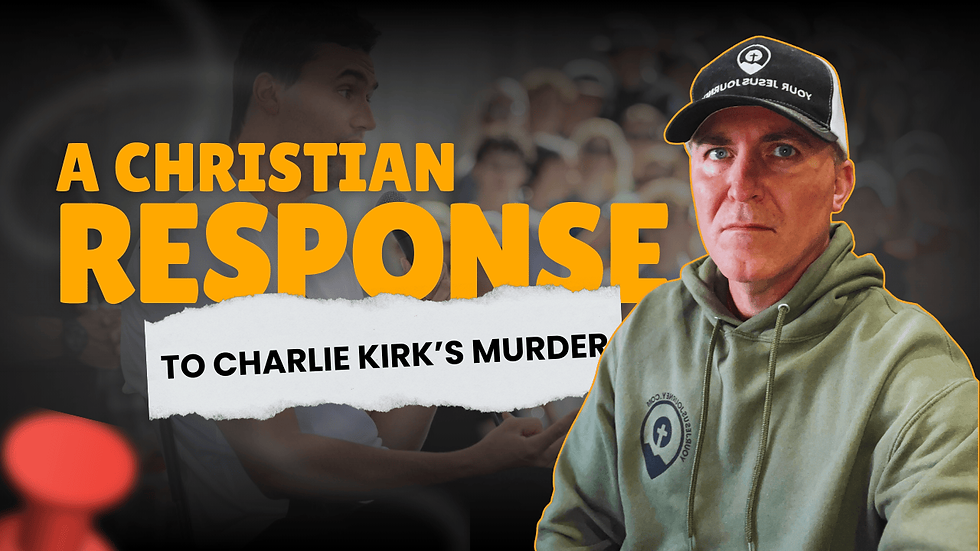
In a world of shocking tragedies, how do Christians grieve? In times of shocking tragedy like the murder of Charlie Kirk, it's natural to feel overwhelmed with questions, anger, and grief. Many of us are looking for a way to process this pain, and the public impulse is often to immediately share our thoughts and frustrations on social media. But there's a different, and I believe more biblically grounded, first step: lament.
➡️ ➡️ ➡️ Click here to get your free study guides, delivered straight to your email: https://forms.wix.com/r/7330608166566101604
Lament is not just crying; it’s a powerful, honest form of prayer where we bring our pain, questions, and confusion directly to God. It’s a spiritual discipline we see throughout the Bible, and it’s a path to true comfort and healing.
In this special episode, we're diving into the biblical practice of lament. We'll explore:
❓ What biblical lament really is.
🙏🏻 How believers in both the Old and New Testaments used it to process immense grief and injustice.
👉🏻 How we can put on a "modern sackcloth and ashes" by pausing, praying through our pain, and grieving for others.
This conversation offers a different kind of comfort—one that acknowledges the pain without providing easy answers and encourages us all to bring our broken hearts directly to God. Lament is the path to true comfort and healing. It is the spiritual discipline that prevents our grief from turning into bitterness and our anger from turning into despair. It allows us to be honest about the terrible things in our world while holding fast to the hope we have in Christ. In this tragic moment, the most faithful response may be to step away from the noise and simply lament with God.
🔎 FREE Study Guide: Learning to Lament 🔎
Want to dive deeper into the scriptures and learn how to truly lament? We've created a free study guide that provides valuable context, history, and cultural details to help you understand God's word, grow in your faith, and help others do the same. This guide, and many others, will be delivered right to your email. No strings attached, no money—just solid biblical teaching in plain language you can understand.
➡️ Click here to get your free study guides, including our brand-new guide on Lament, delivered straight to your email: https://forms.wix.com/r/7330608166566101604
We've journeyed through the Bible, verse by verse, for over 15 books now! We take each passage and break it down into easy-to-understand chunks of plain English. Along the way, we uncover fascinating historical details and explore the cultural context, truly bringing the scriptures to life in a way that resonates. Forget dusty footnotes and words that send you reaching for a thesaurus – we make God's Word approachable and meaningful for everyone. And because we know you're eager to dig even deeper, make sure to subscribe to the Daily Bible Podcast and catch the video podcast each day that complements these blogs!


Comments