
You can arrest the messenger, but you can’t silence the Message. (Acts 5:27-42)
- Thad DeBuhr

- Jan 27
- 9 min read
Study Guide: Acts 5:27-42
The Trial of the Untouchables: When the System Meets the Spirit

Imagine you are a high-ranking official with all the power in the city. You’ve issued a direct order, you’ve locked the rebels in a high-security cell, and you’ve stationed armed guards at the door. You wake up the next morning ready to make an example of them, only to find the cell perfectly locked, the guards standing at attention, but the prisoners… gone.
While you are scratching your head, someone runs in and whispers, "Those guys you locked up? They aren't hiding. They are standing right back in the middle of the most public place in the city, doing exactly what you told them to stop doing."
This is the "can’t make this up" reality of Acts 5. It’s a moment where human authority realizes it is no longer fighting against men, but against a Message that cannot be handcuffed.
👇🏻 Want to see what a modern-day Christian community can look like? Watch This 👇🏻
Before you dig into the study guide, I would suggest reading or listening to the passage in two different bible translations from this list: NIV, NLT, NASB, ESV, NKJV

Learn more about our exciting out-of-the-box ministry here
Setting the Scene: A Movement Out of Control
It's important that we remember that the Book of Acts is a fast-paced narrative. It’s easy to feel like these events are happening one after another on a Tuesday afternoon. However, when we look at the historical clues and the sheer amount of growth described, we realize much more time has passed than it seems. Looking back at the clues helps us understand the timeline, but it also helps us grasp the weight of this courtroom drama. We have to look at the "undercurrents" of Jerusalem at the time. This wasn't just a small religious tiff; it was a massive cultural shift.
From what we read in the beginning of Acts to Acts chapter 5, we are likely looking at a timeframe of 2 to 5 years.
Here is how we can "connect the dots" to see the timeline between the fire of Pentecost (Acts 2) and this courtroom showdown in Acts 5:
1. The Growth Clues
In Acts 2, there are 3,000 believers. By Acts 4:4, the number of men alone has grown to 5,000. By Acts 5:14, Luke stops counting and just says "multitudes" were being added. This kind of explosive growth in a city like Jerusalem doesn't happen in a weekend. It takes time for the "Mobile Temple" to move from house to house, build community, and organize the sharing of resources we see in chapter 4.
2. The Shift in Leadership Style
As we discussed earlier, the Apostles moved from Casting Lots (Acts 1) to being Spirit-led. This represents a "maturing" of the movement. It takes time for a group of people to move from the confusion of "What do we do now that Jesus is gone?" to the bold, seasoned authority they show in front of the High Priest in chapter 5.
3. Historical Markers
Most scholars date the Crucifixion and Pentecost to AD 30 or 33.
Acts 2 (Pentecost): AD 30
Acts 5 (The Trial): Likely between AD 32 and AD 35
We know this because Stephen’s trial (Acts 6–7) and Paul’s conversion (Acts 9) follow shortly after. Most historians place Paul’s conversion around AD 33–35. This means the events in Acts 3, 4, and 5 represent the first few years of the church’s "infancy" and rapid expansion.
Can we know for sure?
Luke (the author) doesn't give us specific dates like "Three years later..." because he is more interested in the momentum of the Spirit than the calendar. But the fact that the religious leaders are now "filled with jealousy" tells us that the Apostles' influence had been nagging at them for a significant amount of time—long enough to turn a "small annoyance" into a "major political threat."
The Geography of Power:
The Apostles were teaching at Solomon’s Porch, a massive covered walkway on the east side of the Temple. It was the "Town Square" of the religious world. By teaching there, they were claiming that Jesus was the true fulfillment of everything that happened inside the Temple walls.
The Political Powder Keg:
The guys in charge—the Sadducees—were the wealthy, "old money" priests. They stayed in power by keeping the peace with the Roman Empire. They didn't believe in the supernatural (no angels, no resurrection). Every time the Apostles said, "Jesus is alive," it wasn't just a religious claim; it was a direct insult to the Sadducees' entire way of life.
The Jealousy Factor:
The Bible says the leaders were "filled with jealousy" (Verse 17). In the original language, this is the word zelos—a boiling, heated envy. They weren't mad that the Apostles were "wrong"; they were mad because they were losing their grip on the people.
Study Summary: The Courtroom Showdown
In the podcast, we broke down how this trial unfolded. Here, we dig deeper into the actual exchange between the "Official System" and the "Spirit-Led Rebels."
1. The Reputation Protection Plan (Verses 27–28)
When the Apostles are brought back to the Council (the Sanhedrin), the High Priest avoids the "elephant in the room." He doesn't ask how they escaped jail. He’s likely too embarrassed. Instead, he focuses on their "disobedience."
The Charge: He says, "You have filled Jerusalem with your teaching and are determined to make us guilty of this man’s blood" (Verse 28).
The Reality: He isn't worried about whether Jesus actually rose from the dead. He is worried that if the crowd believes the leaders killed their Messiah, a riot will break out and the Romans will come in and take away the High Priest’s job. He is protecting his reputation, not seeking the truth.
2. The Ultimate Line in the Sand (Verses 29–32)
Peter’s response is the gold standard for every follower of Jesus: "We must obey God rather than human beings!" (Verse 29).
The "Tree" Insult: Peter says Jesus was killed by "hanging him on a tree." To us, that’s just a word. To the Council, this was a direct quote from the Law (Deuteronomy 21:23) which said anyone hung on a tree was cursed by God.
The Flip: Peter was saying, "You tried to curse Him, but God promoted Him to Prince and Savior." He was telling the most powerful men in the country that they had been on the wrong side of God’s plan.
The Holy Spirit as Witness: Peter claims that the Holy Spirit is a witness to these things. He’s saying, "We aren't just sharing an opinion; we are reporting on a reality that God is currently backing up with power."
3. The Gamaliel Gamble (Verses 33–39)
The Council is so angry they want to execute the Apostles on the spot. Then, a man named Gamaliel stands up. He was a Pharisee—a rival group to the High Priest—who believed in the supernatural.
The Failed Messiahs: He reminds them of two rebels, Theudas and Judas the Galilean. Both had "movements," both were killed, and both of their movements vanished.
The "Wait and See" Method: He tells them, "If this is from man, it will fail. But if it is from God, you will not be able to stop these men; you will only find yourselves fighting against God" (Verse 39).
The Jab: This was a subtle political dig at the Sadducees. Gamaliel was saying, "Why are you so panicked? Are you so unsure of yourselves that you have to kill these guys? Let’s see if God is actually behind this."
4. The Joy of the Scar (Verses 40–42)
The Council listens to Gamaliel, but they still want to leave a mark. They have the Apostles flogged.
The 39 Lashes: In Jewish law, this was 39 lashes. It was a ritual of "correction" designed to shame a person and make them look like a disobedient child.
The Shocking Response: They left the Council rejoicing because they were "counted worthy" to suffer for the Name (Verse 41). They didn't go home to complain about "church hurt." They went right back to the Temple and into people’s homes (Verse 42). They moved from Sacred Dice (relying on luck) to Sacred Scars (relying on the identity of being a witness).
Why We Look at "Wrong" and "Right" Applications

When we read a story about a jailbreak, a miracle, and a heated trial, it’s easy to treat it like a movie where we just root for the "good guys." But Acts was written to train us, not just to inform us. If we don't look at how people misinterpret this passage, we risk using the Bible to support our own bad attitudes or political agendas. We need to make sure we are following the Apostles' mission, not just their rebellious spirit.
🛑 Applying it Wrong: The Common Pitfalls
The "Anti-Government" Excuse: Some people use Peter’s words ("Obey God rather than men") as a green light to ignore any law they don't like—from taxes to speed limits. Peter wasn't being an anarchist. He was specifically talking about the command to share the Gospel. He remained respectful to the Council even while he disagreed with them.
The "Gamaliel is a Saint" Idea: People often use Gamaliel’s "wait and see" approach as a model for faith. It isn't. Gamaliel was a fence-sitter. He wasn't following Jesus; he was just being a smart politician. God doesn't want us to "wait and see" if the Gospel works; He wants us to jump in.
The "Success = God" Error: Gamaliel argued that if it grows, it's from God. We see big cults and evil businesses grow all the time. Just because something is "successful" or "big" doesn't automatically mean God is the author of it. The Apostles' success was measured by their faithfulness, not just their numbers.
✅ Applying it the Right Way:
To get the most out of this study, approach it with these three things in mind:
Check Your "Zelos": When you see someone else "succeeding" in ministry or life, do you get "boiling mad" because you aren't the one in control? The Sadducees' downfall wasn't their lack of knowledge, it was their jealousy.
Mission Over Comfort: Realize that the "open door" for the Apostles led them to a whipping post. Following Jesus doesn't mean life gets easier; it means your life gets a greater purpose.
The "Home and Temple" Balance: Verse 42 shows that they didn't just stay in the big "Church" building. They went into homes. Success in your "Jesus Journey" isn't just about what happens on Sunday; it’s about the "Words of This Life" that you share in your living room or at your campsite.
Questions to Chew on and Discuss:
These questions are designed to help you personally dig deeper into the passage.
Reputation vs. Reality: The High Priest was more worried about his reputation than the truth of the resurrection. Is there any area of your life where you are "protecting your image" instead of being honest about what God is doing?
The Worthy Scar: The Apostles saw their pain as a "medal of honor" from the King. How would your week change if you saw your current "hardship" as a sign that you are being "counted worthy" to serve God?
Journey Group Discussion Starter:
Whether you're helping facilitate a small group, talking about this passage one-on-one with a friend, or even just need a topic to guide the conversation at the dinner table, these ideas can help start a good group conversation before you dive into the passage and questions in this study guide.
The "Church Hurt" Reality: Talk about a time when a "religious system" or leader let you down. Did you pull away from God, or did you do what the Apostles did—dust yourself off, find your tribe, and get back to the mission?
Obeying the Boss: In your daily life (at work or in your neighborhood), what does it look like to "obey God rather than men" in a way that is respectful but firm?
Sum it Up
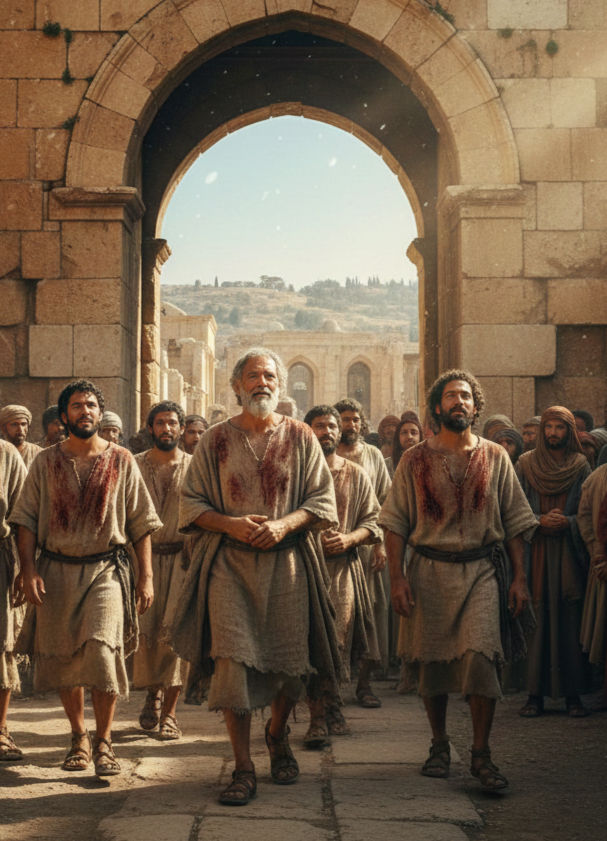
Acts 5:27–42 teaches us that while people can arrest the messenger, they cannot silence the message. God isn't looking for "spectators" who wait to see if the Gospel will succeed; He is looking for witnesses who are willing to bear the scars of the mission.
Whether you are in a "locked room" of struggle or standing on a "porch" of opportunity, your job is the same: to tell the world about the "New Life" found in Jesus.
BE SURE TO WATCH THE VIDEO PODCAST THAT GOES WITH THIS STUDY GUIDE
See viewer comments and questions on screen at the end of the podcast.
HAVE YOU WATCHED THIS VIDEO YET?
MORE RESOURCES TO HELP YOU GROW AS A CHRISTIAN
Read Our Full Statement of Faith: CLICK HERE
Your Jesus Journey is an independent, non-denominational Christian ministry. We're fueled by God's grace and the generosity of our supporters. Our team—led by Pastor Thad and his wife Kaila—is made up of dedicated disciples from all over the United States. Together, we work to help people understand the Bible, find Christian friends, and grow as disciple-makers.

Be sure to grab our free E-Book, "Stop Reading the Bible Wrong: 7 Strategic Shifts that Change Everything." Just click the Free Gift button at the top of our website, and we'll send it to you today!
Go to https://www.yourjesusjourney.com/journeygroups to learn more about Journey Groups, get connected in one, or even learn how to start your own. It's like a spiritual potluck, but instead of questionable casseroles, we share insights and grow closer to God. See you there!
You can also get our FREE in-Depth Bible-Study Guides delivered to your inbox: https://forms.wix.com/r/7330608166566101604.
To learn more about YJJ, Thad and Kaila, and Your Jesus Journey, check out our ABOUT US section: https://www.yourjesusjourney.com/learn-about-thad-and-kaila-and-the-journey-church-online.
There's lots more to see and learn on our website, from our "what we believe" page to hundreds of blogs. We encourage you to swing on by and take a look around at www.YourJesusJourney.com!


Comments