
Jesus Brings Life — We Walk With People Out of the Grave Clothes

Follow Jesus Together - Day 4
Most people know what it feels like to sit across from someone hurting and suddenly feel completely unqualified.
A friend opens up about a struggling marriage. A family member admits they are overwhelmed. Someone in a small group shares anxiety, depression, grief, addiction, loneliness, or spiritual exhaustion.
And almost immediately, panic sets in. “What am I supposed to say?” “What if I say the wrong thing?” “What if I can’t help them?” “What if I don’t know enough Bible?” “What if I can’t fix this?”
For many people, this pressure becomes the reason they avoid deeper relationships altogether. They stay at the surface because deeper community feels too heavy. Too risky. Too complicated.
But one of the most powerful things about the story of Lazarus in John 11 is that Jesus never asks His followers to become the source of resurrection. That role belongs to Him alone.
Instead, Jesus shows His followers something much simpler and much more realistic. He shows them how to grieve with people, walk with hurting people, stay present in painful moments, and help support people as they slowly move forward into healing and life again.
That changes how we think about community.
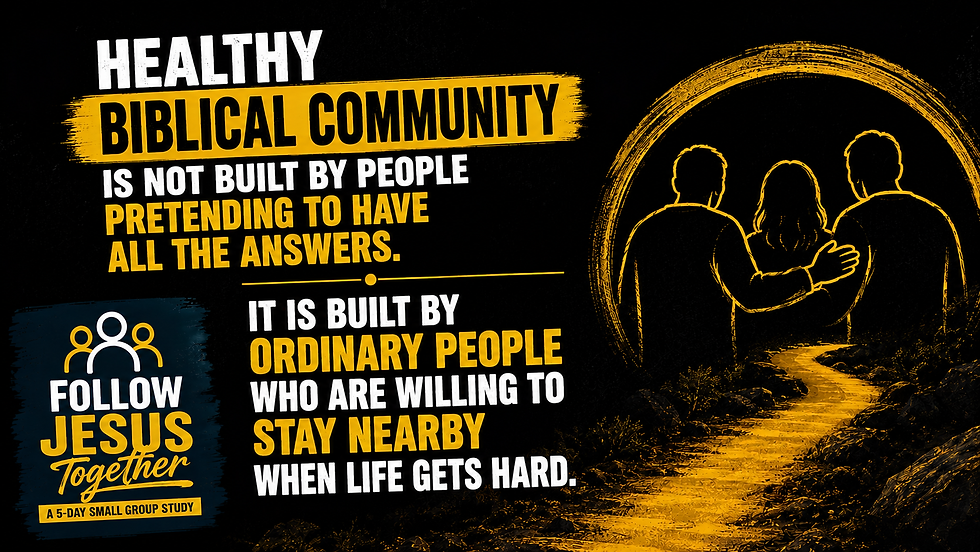
Healthy biblical community is not built by people pretending to have all the answers.
It is built by ordinary people who are willing to stay nearby when life gets hard.
As you go through the study guide, I would suggest reading or listening to the Bible passages in two different bible translations from this list: NIV, NLT, NASB, ESV, NKJV

Learn more about our exciting out-of-the-box ministry here
Setting the scene:
John 11 takes place near the end of Jesus’ public ministry. Tension around Him is growing quickly. Religious leaders in Jerusalem are becoming more aggressive, and only a short time earlier people had attempted to stone Him (John 10:31). When Jesus decides to return to Judea after hearing about Lazarus, the disciples know the danger is real.
The story happens in Bethany, a small village located only about two miles from Jerusalem on the eastern slope of the Mount of Olives. Geography matters here because Bethany sat extremely close to the center of religious power. Jesus is not walking into a quiet rural village far away from opposition. He is moving directly back toward danger.
Lazarus, Mary, and Martha appear to have been close personal friends of Jesus. This is not a random miracle for strangers. John intentionally emphasizes how deeply Jesus loved this family (John 11:5). That detail makes the next part of the story feel confusing.
Jesus waits.
Instead of rushing immediately to Bethany, Jesus remains where He is for two more days.
To modern readers, this delay can almost feel uncaring. But John wants us to understand something deeper is happening.
When Jesus finally arrives, Lazarus has already been dead four days.
That detail would have stood out strongly to many Jewish listeners in the first century. Some Jewish traditions during this period held the belief that the soul lingered near the body for about three days after death before fully departing. By the fourth day, death was viewed as final and irreversible. Hope was gone. No one standing there believed recovery was still possible.
Several Bible scholars and teachers who focus heavily on historical and Jewish context point out that John is intentionally showing the situation has moved beyond every human solution. Jesus delays long enough that nobody can explain away what happens next.
This is not a near-death recovery.
This is resurrection entering complete hopelessness.
That changes the emotional weight of the story.
The grieving in Bethany would also have been loud and public. In Jewish culture during this period, mourning often involved groups of mourners gathering together, weeping openly, grieving collectively, and staying with the family for several days. Grief was not hidden privately behind closed doors the way it often is in modern Western culture. Pain was shared in community.
That cultural background matters because Jesus steps directly into the middle of that grief.
And He does not avoid it.

Summary of the Main Teaching
One of the biggest ideas we discussed during the live lesson is that Jesus never calls His followers to become people’s savior.
Many people quietly believe healthy discipleship means having perfect answers for everyone’s problems. But John 11 paints a very different picture.
When Jesus arrives in Bethany, He encounters heartbreak everywhere He looks. Martha is grieving. Mary is weeping. The mourners are crying loudly. The atmosphere is heavy with disappointment, confusion, and loss.
And then John says something surprising.
Jesus becomes deeply moved and troubled (John 11:33).
Many English translations soften the wording, but the original language carries the idea of deep emotional intensity and outrage. Jesus is not emotionally detached from what He sees. He is angry at what death has done to humanity. He is standing face-to-face with the destruction sin and death bring into the world.
This matters because some people wrongly imagine God as emotionally distant from suffering.
But Jesus steps directly into the grief.
He weeps.
John 11:35 is the shortest verse in the Bible, but it may be one of the most important:
“Jesus wept.”
Jesus already knows resurrection is coming. He already knows Lazarus will walk out of the tomb. Yet He still stops to mourn with the people He loves.
That alone teaches something powerful about community.
Sometimes the most loving thing we can do is simply sit with hurting people honestly.
Not rushing to solve everything. Not preaching at people immediately. Not offering quick spiritual clichés. Not trying to force people to “move on.”
Just being present.
Romans 12:15 says:
“Rejoice with those who rejoice; mourn with those who mourn.”
Jesus models that perfectly.
Another important moment in the story happens after Lazarus walks out of the tomb alive.
Jesus performs the miracle. Only Jesus brings resurrection.
But then Jesus says something unexpected to the people standing nearby:
“Take off the grave clothes and let him go” (John 11:44).
Jesus could have removed the grave clothes Himself.
But He intentionally involves the community.
This becomes a powerful picture of discipleship and spiritual growth.
Jesus changes people.
But community still plays a meaningful role in helping people move forward afterward.
Many people come alive spiritually while still carrying fear, shame, grief, addiction, unhealthy habits, insecurity, loneliness, or painful patterns from the past. Change often happens slowly. People usually need encouragement, patience, prayer, accountability, support, and steady relationships over time.
That is part of what healthy community does.
Not fixing people.
Helping people walk forward.
This is where many modern Christians become confused. Some swing too far toward trying to rescue everyone emotionally. Others swing too far the other direction and assume relationships do not matter because “only Jesus changes people.”
John 11 holds both truths together beautifully.
Jesus brings life.
People help remove grave clothes.
Will you partner with us to help more people understand the Bible, grow in community, and follow Jesus?

Learn more about supporting this ministry here.
Why We Look at "Wrong" and "Right" Applications

John 11 is one of those passages that can either create tremendous freedom or tremendous pressure depending on how people apply it.
Some readers walk away believing they must become everyone’s emotional rescuer. Others use spiritual language to avoid messy relationships entirely. Some people rush grieving people too quickly toward “victory” language while others become passive and disconnected.
This is why context matters so much.
When we slow down and study what Jesus is actually doing in this story, we begin to see a healthier picture of biblical community emerge. Jesus is neither emotionally distant nor emotionally overwhelmed. He enters pain honestly while still pointing people toward hope.
That balance matters deeply today.
❌ APPLYING IT WRONG
1. Trying To Become Everyone’s Savior
One of the most common unhealthy applications is believing mature Christians should always have answers for everybody’s struggles.
People begin carrying emotional weight God never asked them to carry. They quietly believe:
“If I cannot fix this person, then I am failing them.”
But John 11 reminds us resurrection belongs to Jesus.
We are not the source of transformation. We are not the Holy Spirit. We cannot heal every wound, solve every crisis, or remove every struggle from somebody’s life. Trying to carry that responsibility usually leads to burnout, control, emotional exhaustion, or unhealthy relationships.
Healthy discipleship points people toward Jesus instead of making ourselves responsible for changing them.
2. Rushing Past Grief Too Quickly
Another unhealthy application is becoming uncomfortable with pain. Many people instinctively rush toward fixing because grief feels awkward and helpless. They begin throwing verses, advice, or solutions at hurting people before truly listening.
But Jesus did not rush past grief.
He stopped and wept.
Even knowing resurrection was coming, He still honored the reality of human pain.
Sometimes quick spiritual answers make people feel unseen rather than loved.
3. Treating Community Like It Doesn’t Matter
Some people overcorrect the other direction and assume relationships play almost no role in spiritual growth.
They say things like: “Well, only Jesus changes people.”
That statement is true — but incomplete.
Jesus intentionally involved people in helping Lazarus after resurrection. The community mattered. Friendship mattered. Presence mattered. Support mattered.
God often works through ordinary people consistently loving one another over time.
✅ Applying it the Right Way:
1. Learn To Be Present Before Trying To Be Impressive
One of the healthiest lessons from John 11 is that presence often matters more than polished answers. Most hurting people are not looking for a perfect speech. They are looking for somebody who genuinely cares enough to stay nearby.
Jesus entered the pain before addressing the miracle.
Healthy community learns to slow down enough to listen carefully, ask thoughtful questions, and allow people to grieve honestly. Sometimes the most spiritual thing someone can say is: “I’m really sorry.” “That sounds incredibly hard.” “I’m here with you.” “I’m praying for you.”
Those simple responses often communicate far more love than complicated advice.
2. Understand That Growth Usually Happens Slowly
Lazarus walked out of the tomb alive, but still wrapped in grave clothes.
That image matters. Many people experience genuine spiritual renewal while still carrying old habits, wounds, fears, shame, unhealthy thinking, or emotional baggage. Transformation often unfolds gradually.
Healthy community helps people take steady steps forward instead of demanding instant perfection.
This is one reason consistency matters so much in discipleship. Ongoing friendship, prayer, encouragement, phone calls, text messages, Zoom conversations, and regular check-ins create the kind of environment where long-term growth becomes possible.
3. Recognize The Role Community Plays In Healing
The early church lived in an intensely relational culture. People shared meals, homes, grief, celebrations, resources, and daily life together. Faith was never meant to become a completely isolated personal experience.
Today many relationships grow across distance through technology. Group texts, voice messages, online Bible studies, video calls, and prayer threads can become meaningful ways people stay connected consistently.
Technology becomes incredibly valuable when it strengthens authentic relationship.
The goal is not perfect systems.
The goal is faithful presence.
Questions to Chew on and Discuss:
These questions are designed to help you personally dig deeper into the passage and help guide your discussions in your Journey Groups and Me & 3 small groups.
THE FACTS — What Does the Passage Say?
What connection do you see between faithfulness and trust in Luke 16:10?
According to Hebrews 10:24–25, why is gathering consistently important?
What repeated themes about encouragement and perseverance appear throughout these passages?
THE MEANING — What Does It Mean?
What does this story teach us about how Jesus responds to grief and suffering?
Why is it important to understand that Jesus brings resurrection while the community still has a supporting role?
How does this story challenge modern ideas about fixing people, avoiding pain, or isolating spiritually?
THE HEART — What Am I Hearing?
Do you tend to avoid hurting people because you feel pressure to have all the answers?
Are there places in your life where you need people to help you “remove grave clothes” and walk forward?
What part of Jesus’ response in John 11 connects most deeply with you personally?
THE HANDS — What Will I Do?
Who in your life may simply need your consistent presence right now?
What would it look like to support someone without trying to control or rescue them?
Is there one practical way you could check in, encourage, pray for, or walk beside somebody this week?
Journey Group OR ME & 3 Small Group Discussion Starters:
Whether you're helping facilitate a small group, talking about this passage one-on-one with a friend, or even just need a topic to guide the conversation at the dinner table, these ideas can help start a good group conversation before you dive into the passage and questions in this study guide.
One helpful way to begin discussion tonight is by asking everyone:
“Have you ever gone through a difficult season where somebody’s presence mattered more than their advice? What did they do that helped?”
Another strong discussion starter could be:
“Which part of the Lazarus story stands out to you most — Jesus weeping, Jesus being angry at death, the four days in the tomb, or the grave clothes? Why?”
These kinds of conversations often help people move from surface-level discussion into honest reflection and meaningful connection.
🧩 SUM IT UP
John 11 reminds us that Jesus never asked us to become people’s savior.
Jesus brings life. Jesus changes hearts. Jesus brings resurrection.
Our role is simpler, but still deeply important.
We walk with people.
We pray with people.
We grieve with people.
We encourage people.
We stay present.
We help people keep moving forward.
Healthy biblical community is not built by perfect people with perfect answers.
It is built by ordinary people willing to love faithfully over time.
And sometimes the most powerful thing we can do is simply stay nearby while Jesus does the transforming work only He can do.
WHAT'S COMING NEXT

Experience the God of the Wilderness

Throughout the Bible, the desert isn't just a place of heat and sand; it is God’s favorite classroom. It’s where He took Moses to see the burning bush, where He shaped the Israelites into a nation, and where Jesus was prepared for His ministry.
There is something about stepping away from the "safe structures" of the city and into the stillness of the high desert that clears the noise and lets you hear God's voice.
Are you willing to come to the wilderness for a time of preparation and growth? If you feel God moving you out of your comfort zone and into a deeper dependence on Him, we invite you to join us on our off-grid property in Northwest Arizona.
Arizona Bible Experience Retreat 📅 Dates: October 17-23, 2026 📍 Location: Meadview, AZ
Incredible scenery, excellent teaching, and friendships forged from slot canyons to campfires. We have limited spots available to keep the experience intimate and impactful.
Several lodging options. Daily excursions. Shared meals, campfires, and more! Includes a day at the West Rim of the Grand Canyon and so much more.

Save the Date: The Pig Out-Play & Praise
Every September, the whole YJJ community rallies together in beautiful North Idaho for our annual gathering. We call it "The Pig Out-Play & Praise"—and for good reason! We smoke a whole hog and briskets for a week of incredible food, deep fellowship, and powerful worship led by two different teams.
The Biblical Connection:
Did you know that God actually built "big meet-ups" into the very rhythm of life for His people? From the Appointed Feasts to the harvest gatherings, the ancient Israelites were commanded to stop, gather, and celebrate what God was doing. The value of these rhythms remains true for us today. We need these "mountain top" moments to refuel and reconnect.
Registration is OPEN now! Get your tickets here:
HAVE YOU WATCHED THIS VIDEO YET?
MORE RESOURCES TO HELP YOU GROW AS A CHRISTIAN
Read Our Full Statement of Faith: CLICK HERE
Your Jesus Journey is an independent, non-denominational Christian ministry. We're fueled by God's grace and the generosity of our supporters. Our team—led by Pastor Thad and his wife Kaila—is made up of dedicated disciples from all over the United States. Together, we work to help people understand the Bible, find Christian friends, and grow as disciple-makers.

Be sure to grab our free E-Book, "Stop Reading the Bible Wrong: 7 Strategic Shifts that Change Everything." Just click the Free Gift button at the top of our website, and we'll send it to you today!
Go to https://www.yourjesusjourney.com/journeygroups to learn more about Journey Groups, get connected in one, or even learn how to start your own. It's like a spiritual potluck, but instead of questionable casseroles, we share insights and grow closer to God. See you there!
You can also get our FREE in-Depth Bible-Study Guides delivered to your inbox: https://forms.wix.com/r/7330608166566101604.
To learn more about YJJ, Thad and Kaila, and Your Jesus Journey, check out our ABOUT US section: https://www.yourjesusjourney.com/learn-about-thad-and-kaila-and-the-journey-church-online.
There's lots more to see and learn on our website, from our "what we believe" page to hundreds of blogs. We encourage you to swing on by and take a look around at www.YourJesusJourney.com!



Comments